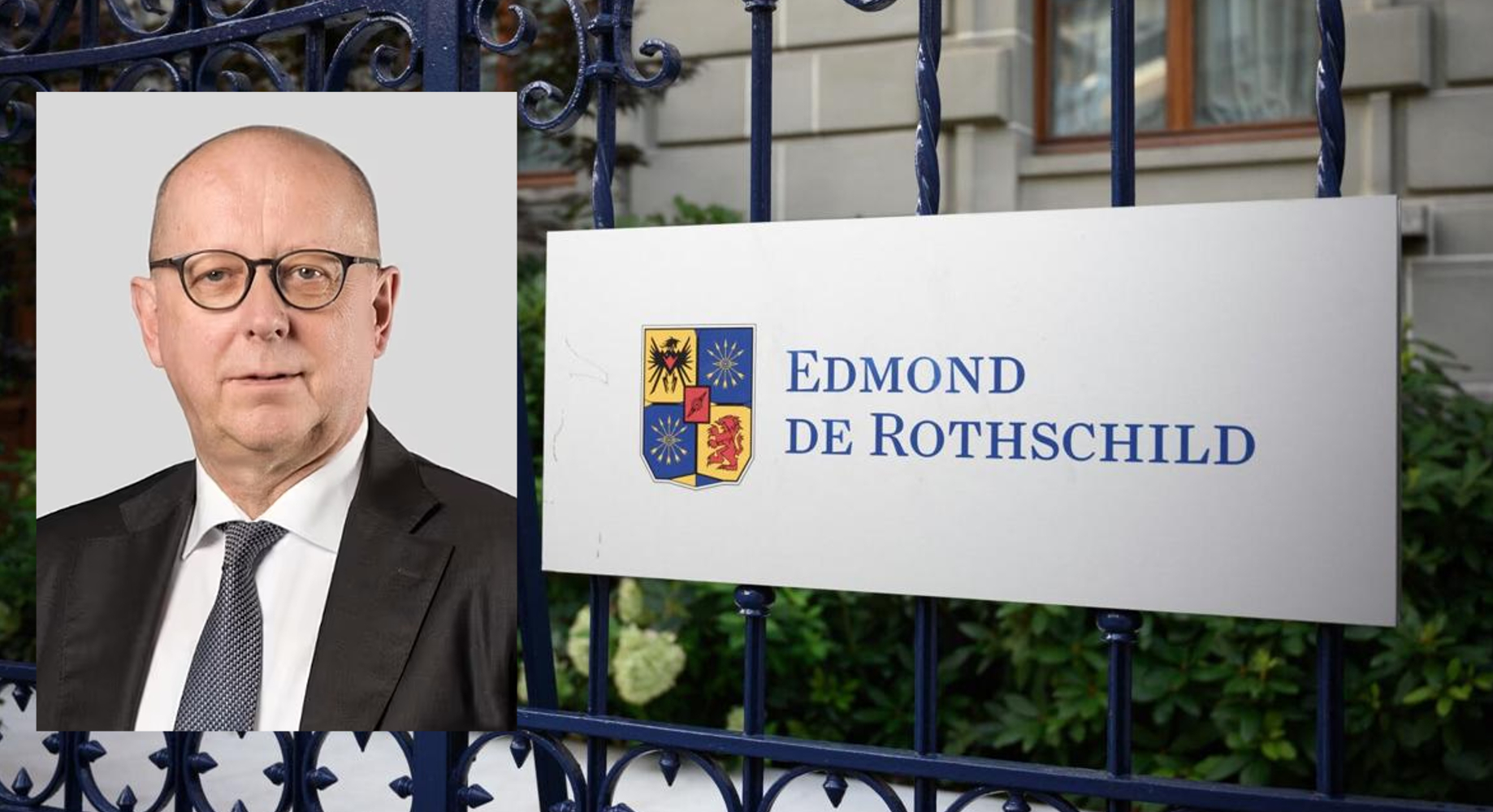

VATICAN CITY — The Vatican Bank has appointed former Banque Edmond de Rothschild executive François Pauly as the next president of its Board of Superintendence, placing a veteran European banker with ties to one of Europe’s most prominent financial dynasties at the helm of the Holy See’s financial institution.
The Vatican’s Institute for the Works of Religion, commonly known as the Vatican Bank or IOR, announced that Pauly formally assumed the role after an April 28 board meeting approving the institute’s 2025 financial statements. He succeeds Jean-Baptiste Douville de Franssu, who has overseen years of reforms aimed at improving transparency and restoring confidence in the bank following decades of controversy.
Pauly, a Luxembourg national, previously held senior banking posts across Europe and served as CEO and chairman of Banque Internationale à Luxembourg. He also served as President of Edmond de Rothschild Europe, the Swiss private banking group led by Ariane de Rothschild.
His appointment comes as renewed attention has focused on the Rothschild banking network following the recent release of U.S. Justice Department files tied to the late financier and convicted sex offender Jeffrey Epstein.
The records revealed that Ariane de Rothschild, chief executive of Edmond de Rothschild, exchanged dozens of emails and arranged meetings with Epstein between 2013 and 2019. The communications showed discussions about meetings in Paris and New York and included personal exchanges involving gifts and travel arrangements.
A spokesperson for Edmond de Rothschild told Reuters that Epstein was a business acquaintance of Ariane de Rothschild and that she had no knowledge of his criminal conduct.
Epstein, who pleaded guilty in 2008 to soliciting prostitution from a minor and later faced federal sex trafficking charges in 2019, also expressed a specific interest in the Vatican Bank itself.
In an FBI declassified 2013 email to former U.S. Treasury Secretary and Harvard University President Larry Summers, Epstein discussed developments inside the Vatican Bank during Pope Benedict XVI’s final months as pope. Epstein described the IOR as uniquely shielded from European financial transparency requirements because of the Vatican’s sovereign status.
“The most important change in the Vatican may not be Pope Benedict XVI sudden retirement but the change in leadership at ‘the Institute for Works of Religion,’ the Vatican’s bank,” Epstein wrote.
He characterized the institution as a vehicle allowing elite clients to avoid scrutiny in international money transfers and referenced investigations surrounding former Vatican Bank president Ettore Gotti Tedeschi. Epstein also alluded to fears allegedly expressed by Tedeschi that he could be killed because of what he knew about Vatican finances.
The email surfaced years after the Vatican launched sweeping reforms intended to improve oversight and anti-money-laundering compliance at the bank.
Outgoing IOR President Douville de Franssu said the institution now maintains relationships with more than 35 correspondent banks worldwide and has earned top anti-money-laundering ratings from Moneyval, the Council of Europe’s financial monitoring body.
The Vatican has spent more than a decade attempting to distance the IOR from scandals involving opaque financial transfers, corruption allegations and offshore dealings that for years damaged the Holy See’s reputation in global banking circles.
Pauly’s appointment places another figure connected to the broader Rothschild financial network in a prominent Vatican financial role at a time when Epstein-related disclosures continue drawing scrutiny to elite banking and social circles across Europe and the United States.